(1).png?w=1016&h=340)
Floating Glass Lighting Installation for Hotel Lobbies
Sep 18,2025
In large-scale hotel lobby design, lighting plays a critical role beyond illumination. It defines spatial identity, guides circulation, and shapes how visitors perceive scale and atmosphere. In long, high-ceiling environments, a distributed lighting approach can be more effective than a single focal fixture.
Design Approach
Instead of relying on a central chandelier, a field-based lighting strategy distributes many small light sources across the ceiling plane. This creates a continuous visual layer, allowing light to extend throughout the entire space rather than concentrating in one point.
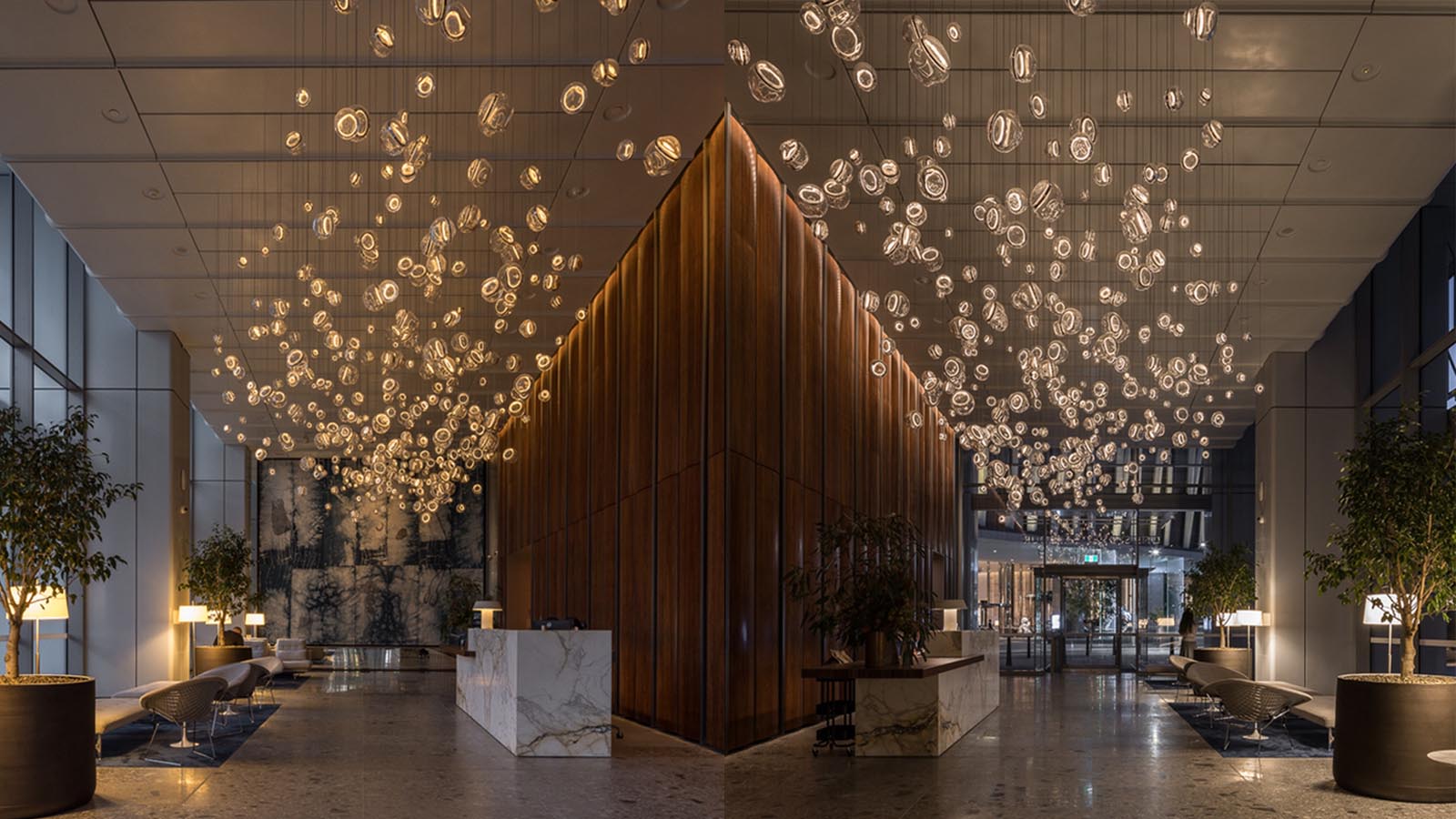
Benefits of this approach include:
-
Reducing the sense of emptiness in large volumes
-
Creating a more immersive environment
-
Supporting linear movement through the space
Lighting Composition
The installation is composed of numerous glass elements suspended at varying heights. While the arrangement appears random, it is controlled through density and distribution rules.
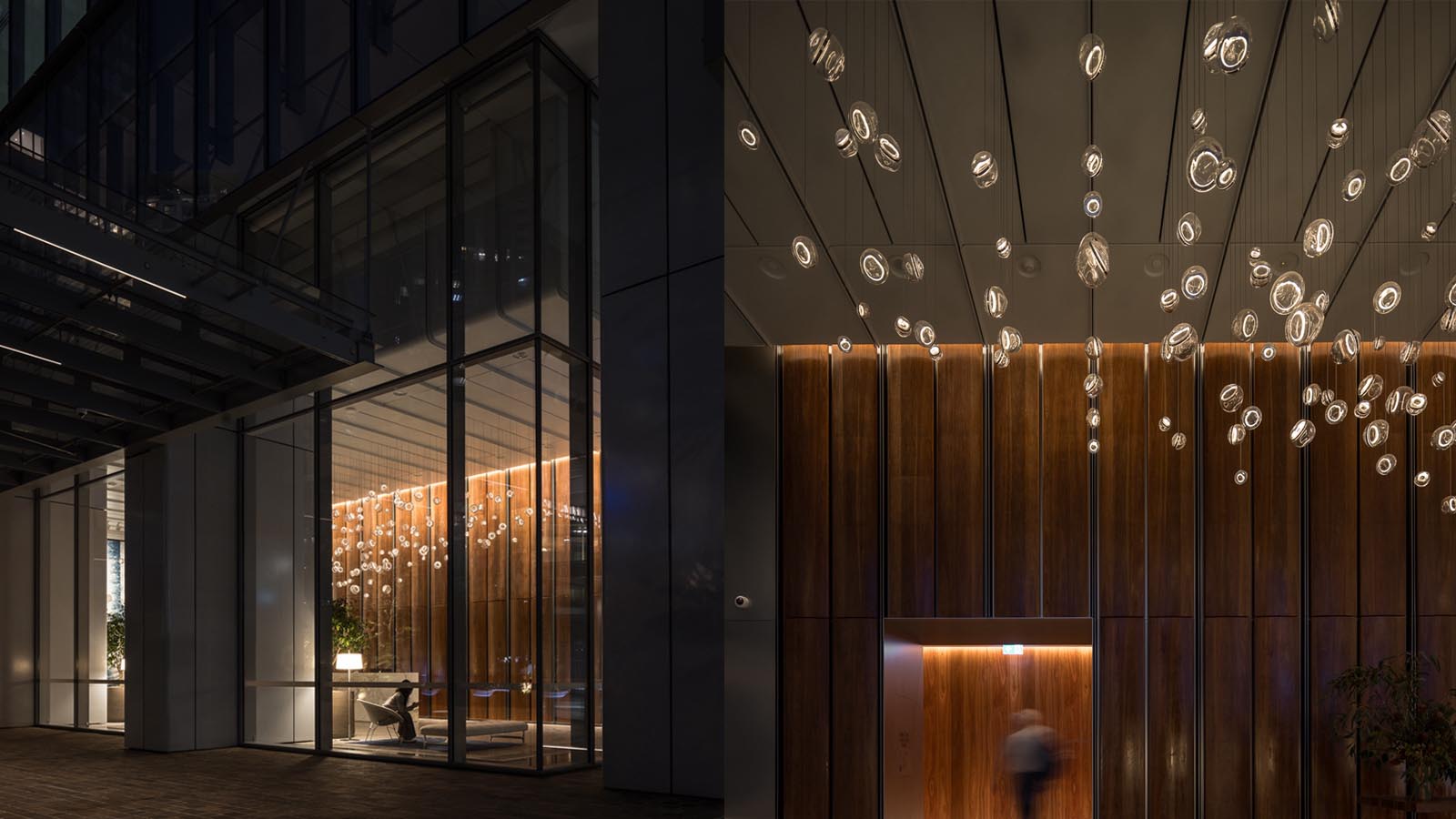
This results in:
-
A lightweight, floating visual effect
-
Layered depth through vertical variation
-
A soft, cloud-like presence across the ceiling
As viewers move through the space, the composition shifts, introducing subtle variation without visual clutter.
Material and Light Quality
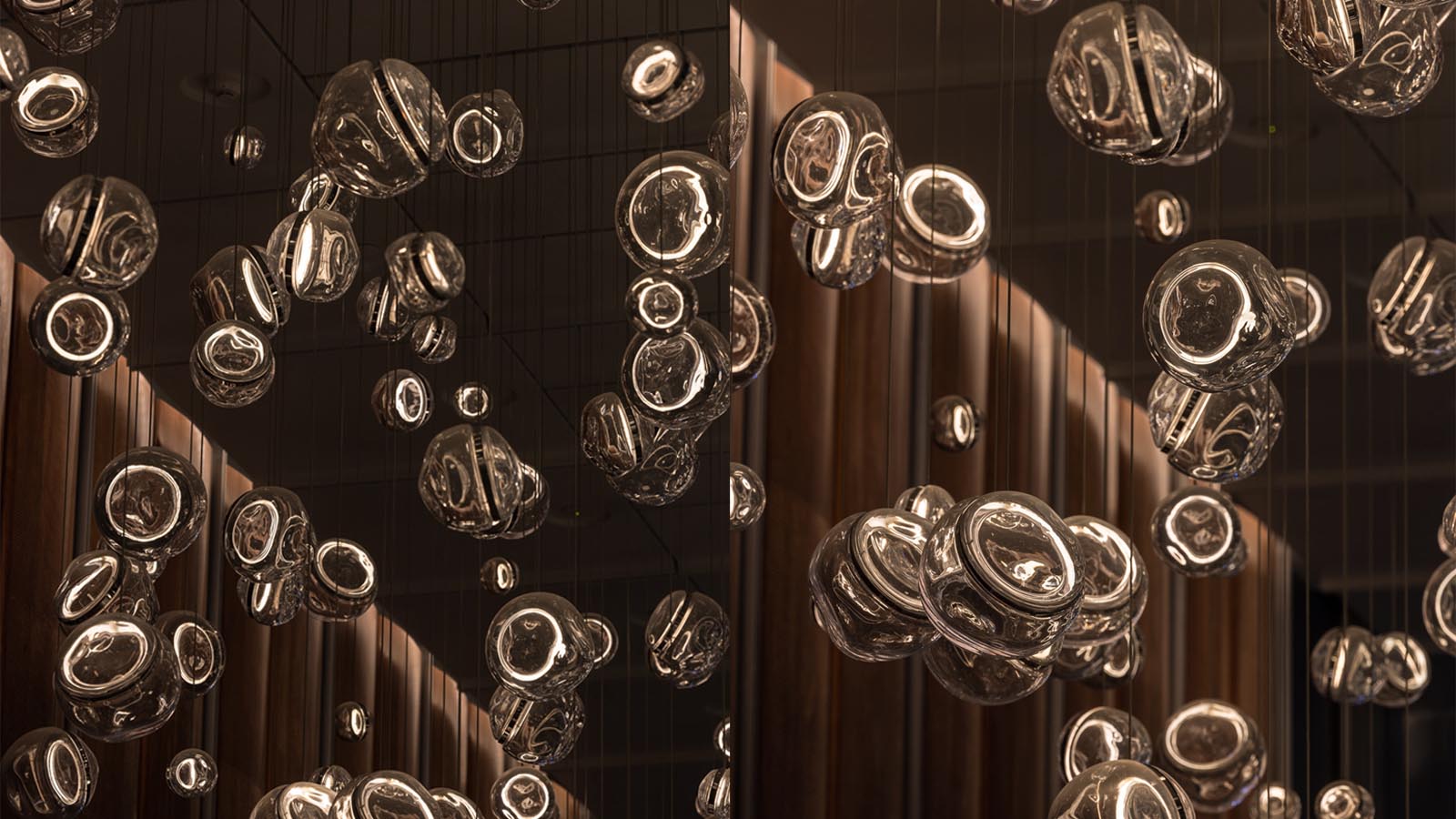
Each unit typically combines transparent glass with an integrated light source. The optical behavior of the glass contributes significantly to the overall effect:
-
Soft diffusion reduces glare
-
Inter-reflection between elements adds complexity
-
Warm color temperature improves comfort
Together, these factors produce a refined lighting environment that remains calm and balanced.
Integration with Architecture
For optimal results, the lighting system should align with the architectural framework:
-
Suspension points coordinated with the ceiling grid
-
Density adjusted according to functional zones
-
Visual continuity maintained across the full length of the space
Higher concentration can be used near key areas such as reception, while more open distribution suits circulation zones.
User Experience
A distributed lighting field creates a layered spatial experience. At close range, individual elements are visible and detailed; at a distance, they merge into a unified luminous surface.
This dual perception enhances spatial richness while maintaining visual clarity, making the environment feel both dynamic and controlled.
Conclusion
Field-based glass lighting systems offer an alternative to traditional feature lighting in large hospitality interiors. By focusing on distribution, material behavior, and integration, they provide a balanced solution that enhances both atmosphere and spatial coherence.