(1).png?w=1016&h=340)
The Architect’s Guide to Dining Room Lighting: Sizing, Placement, and Proportions
Oct 16,2025
The dining room is more than just a place to eat; it is the culinary theater of your home. At the heart of this space hangs the dining room chandelier or pendant—an architectural focal point that dictates the mood, anchors the furniture, and elevates the entire aesthetic.
However, curating the perfect dining room lighting goes far beyond simply choosing a beautiful silhouette. The most breathtaking fixture can instantly lose its charm if it feels dwarfed by a grand dining table or overwhelms an intimate dining nook. Mastering high-end interior design requires a strict adherence to the golden rules of proportion, scale, and placement.
Whether you are remodeling your space or upgrading your interior styling, this comprehensive guide will walk you through the professional formulas interior designers use to select the perfect dining room fixture.
Mastering the Scale: Sizing by Table Dimensions
The most critical reference point for your dining room fixture is not the room itself, but the dining table it illuminates. The fixture and the table must exist in perfect visual harmony.
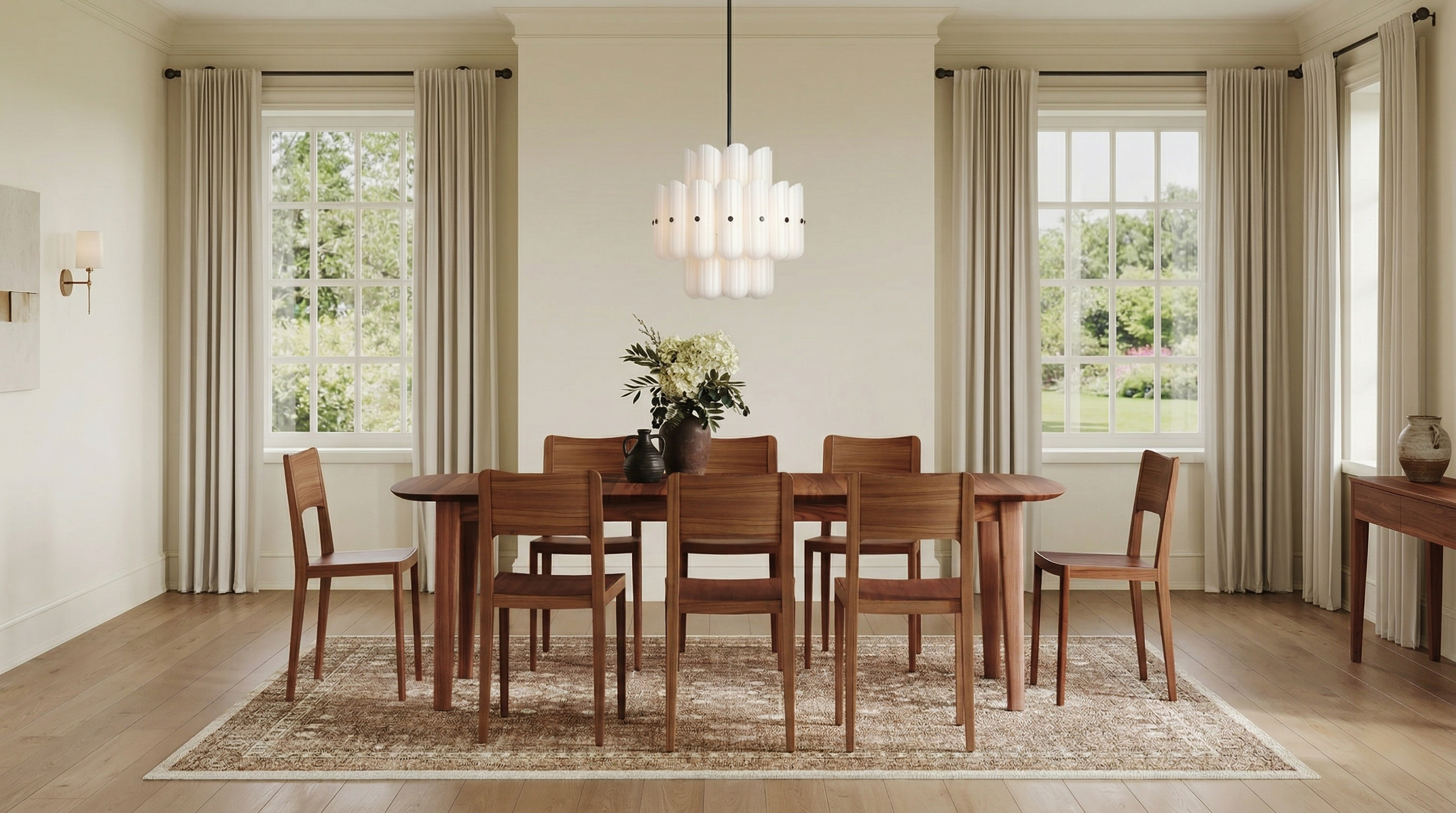
The Diameter Formula: As a general rule of thumb, the diameter of your chandelier should be roughly 1/2 to 2/3 the width of your dining table.
For a more precise mathematical approach, use the "Minus 12" rule: simply measure the width of your dining table in inches and subtract 12. For example, if your table is 42 inches wide, your ideal chandelier diameter is approximately 30 inches.
The Clearance Rule: To prevent bumped heads when guests are sitting or standing, and to ensure the fixture doesn't visually overpower the edges of the table, always leave a minimum of 6 inches of clearance from the outer edge of the chandelier to the edges of the table on all sides.
Styling for Long Rectangular Tables: If you are styling a grand, extended dining table (over 8 feet or 96 inches), a single round chandelier might feel isolated in the center. Instead, consider:
-
A Linear Chandelier: A singular, elongated fixture that mirrors the shape of the table. The length of a linear fixture should be about 1/3 to 1/2 the total length of the table.
-
Multiple Pendants: Hanging two or three identical medium-sized pendants creates a stunning visual rhythm. Ensure they are spaced evenly, typically 24 to 30 inches apart from the center of one fixture to the next.
The Room Ratio: Sizing by Architectural Dimensions
While the table is your primary guide, the architectural volume of the room cannot be ignored, especially in open-concept homes or spaces with soaring ceilings.
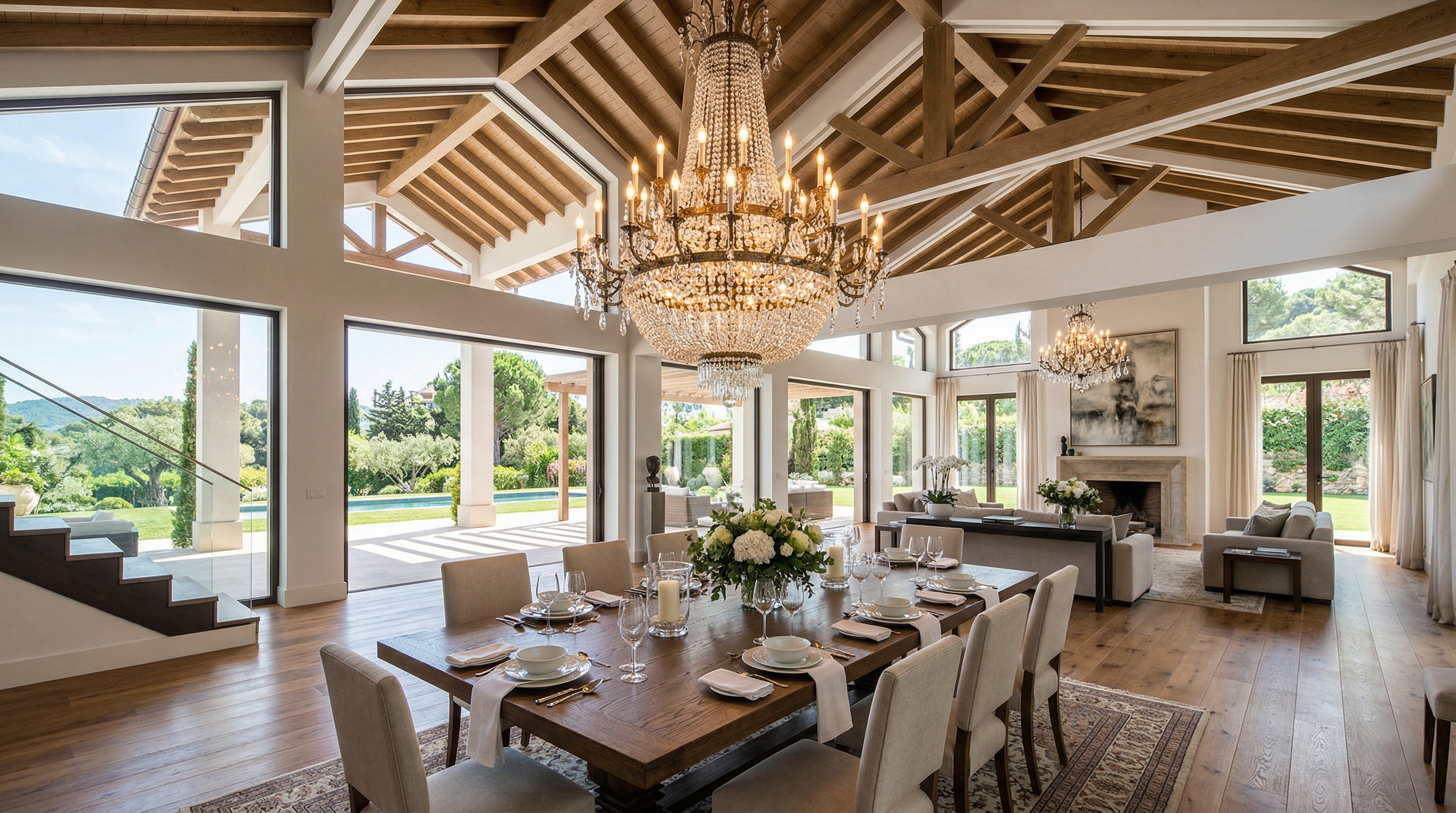
The Room Dimension Formula: If you want to ensure the fixture fills the volume of the room beautifully, add the length and width of the room together in feet. That number translates directly to the ideal diameter of your chandelier in inches.
Example: If your dining room is 14 feet by 16 feet (14 + 16 = 30), a chandelier with a 30-inch diameter will look architecturally proportional to the space.
The Perfect Drop: Hanging Height Guidelines
Finding the right size is only half the battle; suspending it at the correct height is what ensures flawless execution. The height dictates the spread of light and ensures unobstructed sightlines across the table.
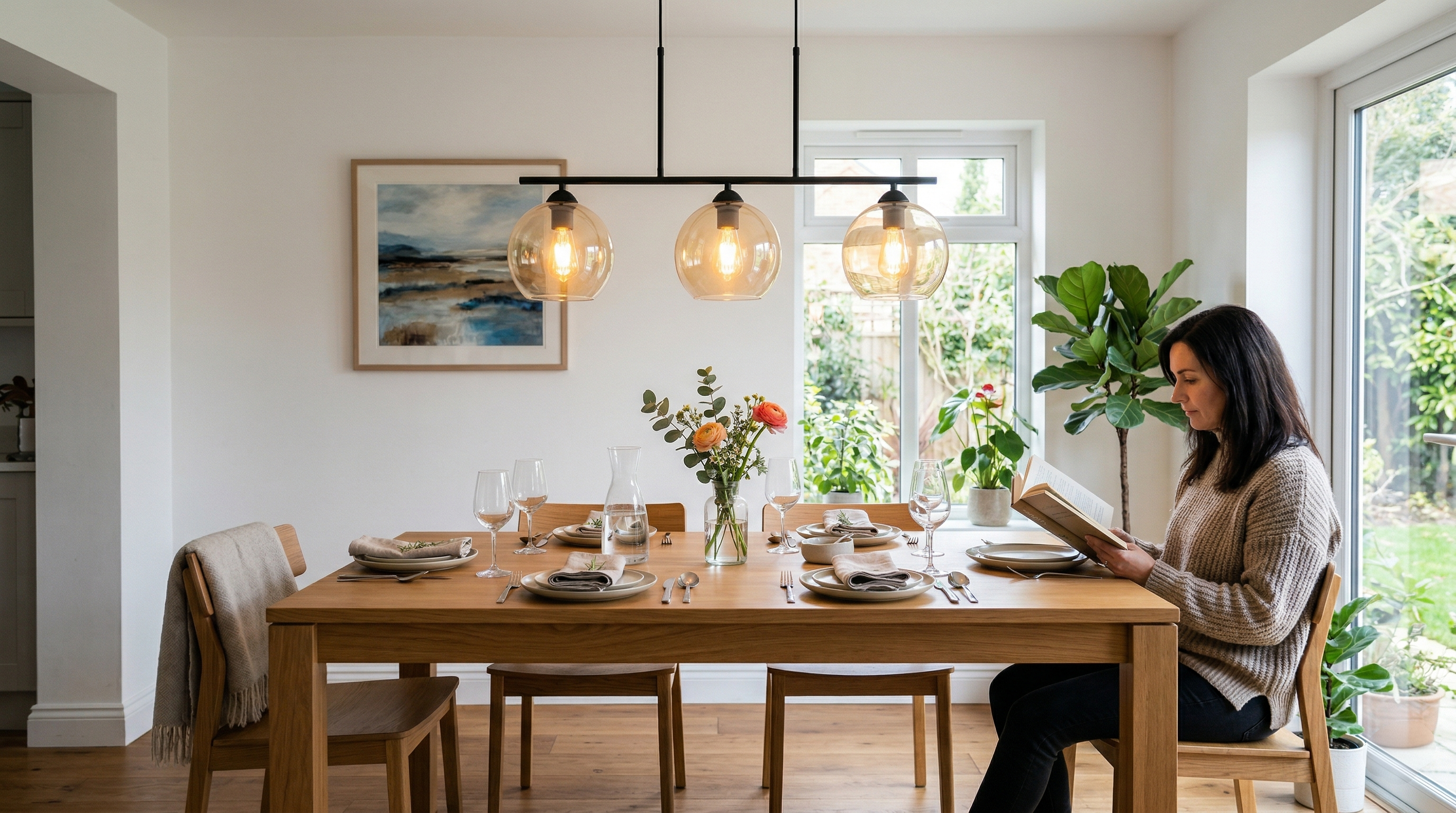
The Standard Drop: For standard 8-foot ceilings, the bottom of the chandelier should hang exactly 30 to 36 inches above the tabletop. This specific height creates an intimate pool of light over the dining area while keeping the bulb glare out of your guests' eyes.
Adjusting for Ceiling Height: Higher ceilings demand higher placement so the fixture doesn't feel disconnected from the architecture. For every additional foot of ceiling height above 8 feet, raise the chandelier by 3 inches.
-
9-foot ceiling: Hang 33–39 inches above the table.
-
10-foot ceiling: Hang 36–42 inches above the table.
The Art of Illumination: Color Rendering and Ambiance
In premium interior design, the quality of light is just as important as the design of the fixture itself. The right illumination makes food look appetizing and skin tones look healthy and radiant.
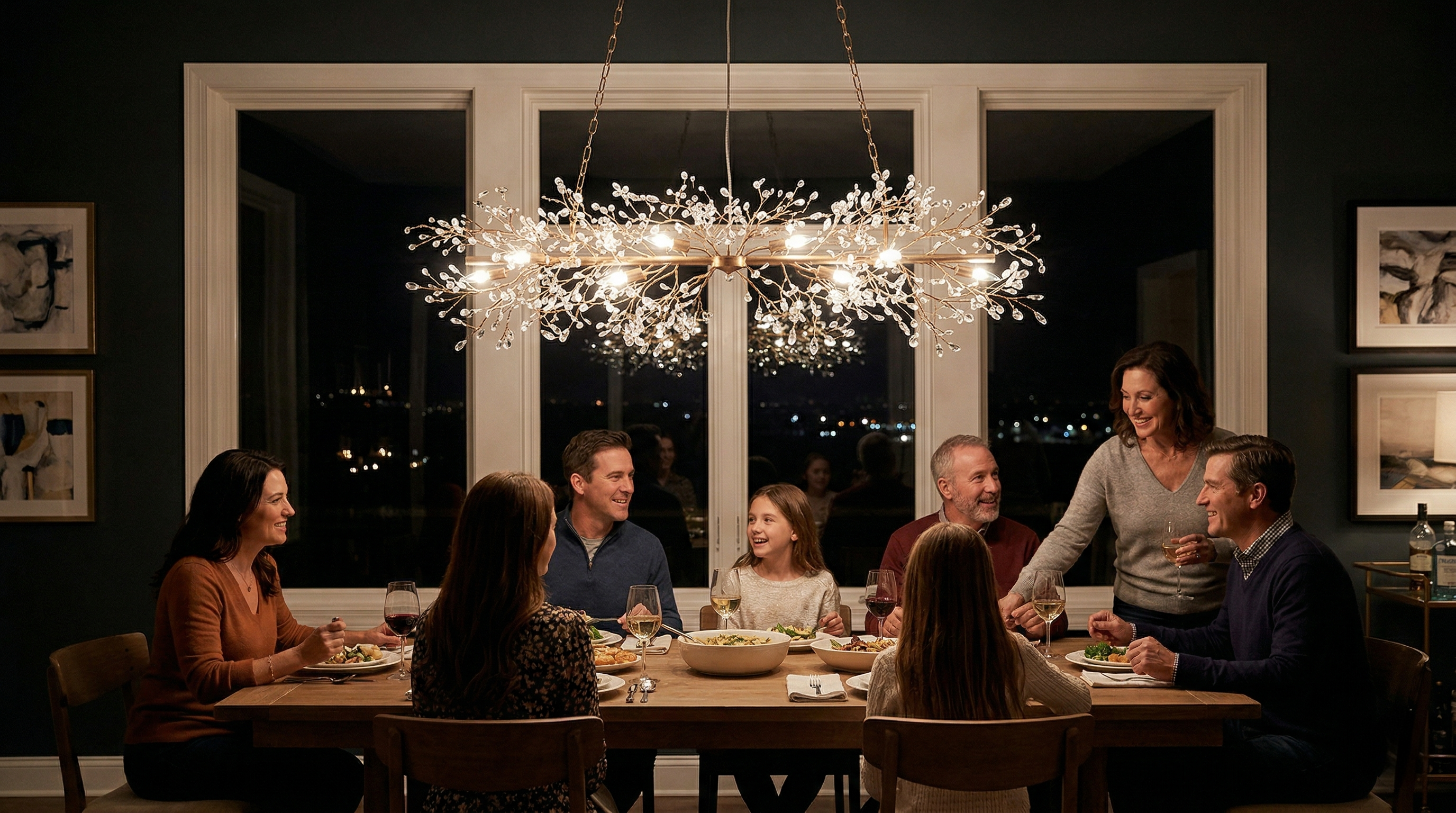
Color Temperature (Kelvins): Always opt for warm white bulbs in the dining room, specifically between 2700K and 3000K. This mimics the flattering, intimate glow of candlelight. Avoid daylight bulbs (4000K+), which can make a dining room feel sterile and commercial.
Color Rendering Index (CRI): When selecting integrated LED fixtures or buying bulbs, look for a CRI of 90 or above. High CRI ensures that the rich colors of your mahogany table, your upholstered chairs, and your culinary creations are rendered accurately and vibrantly.
The Golden Rule of Ambiance: Always Use a Dimmer. A dining room is a multi-functional space. It serves as a bright workspace for homework in the afternoon and transforms into a moody, romantic setting for dinner parties at night. Installing a high-quality dimmer switch is non-negotiable for achieving high-end functionality.
Elevate Your Dining Experience
Selecting the perfect dining room lighting is an investment in your home’s atmosphere and everyday living experience. By respecting the proportions of your table, the scale of your room, and the science of illumination, you can confidently choose a fixture that not only looks magnificent but feels instinctively right.
Ready to find your centerpiece? Explore our curated collection of Dining Room Chandeliers to discover sculptural silhouettes, hand-forged metals, and timeless designs tailored for the modern luxury home.