(1).png?w=1016&h=340)
Bathroom Vanity Lighting Guide: Height, Placement, and Common Mistakes
Jun 11,2026
Bathroom vanity lighting is one of the most practical lighting decisions in the home. It affects how the bathroom looks, how the mirror functions, and how comfortable the space feels during everyday routines.
A beautiful bathroom can still feel uncomfortable if the vanity lighting is placed poorly. Shadows under the eyes, harsh overhead glare, uneven mirror light, or fixtures that sit too high can make the space less useful. The goal is simple: soft, even light around the face, with enough warmth and clarity for daily use.
Place Vanity Lights at Face Level When Possible
The most flattering vanity lighting usually comes from the sides of the mirror, close to face level. This helps reduce strong shadows and creates more even illumination across the face.
Wall sconces placed on both sides of the mirror are often more comfortable than a single light above the mirror. Side lighting supports grooming, skincare, shaving, and makeup because it lights the face more evenly from both directions.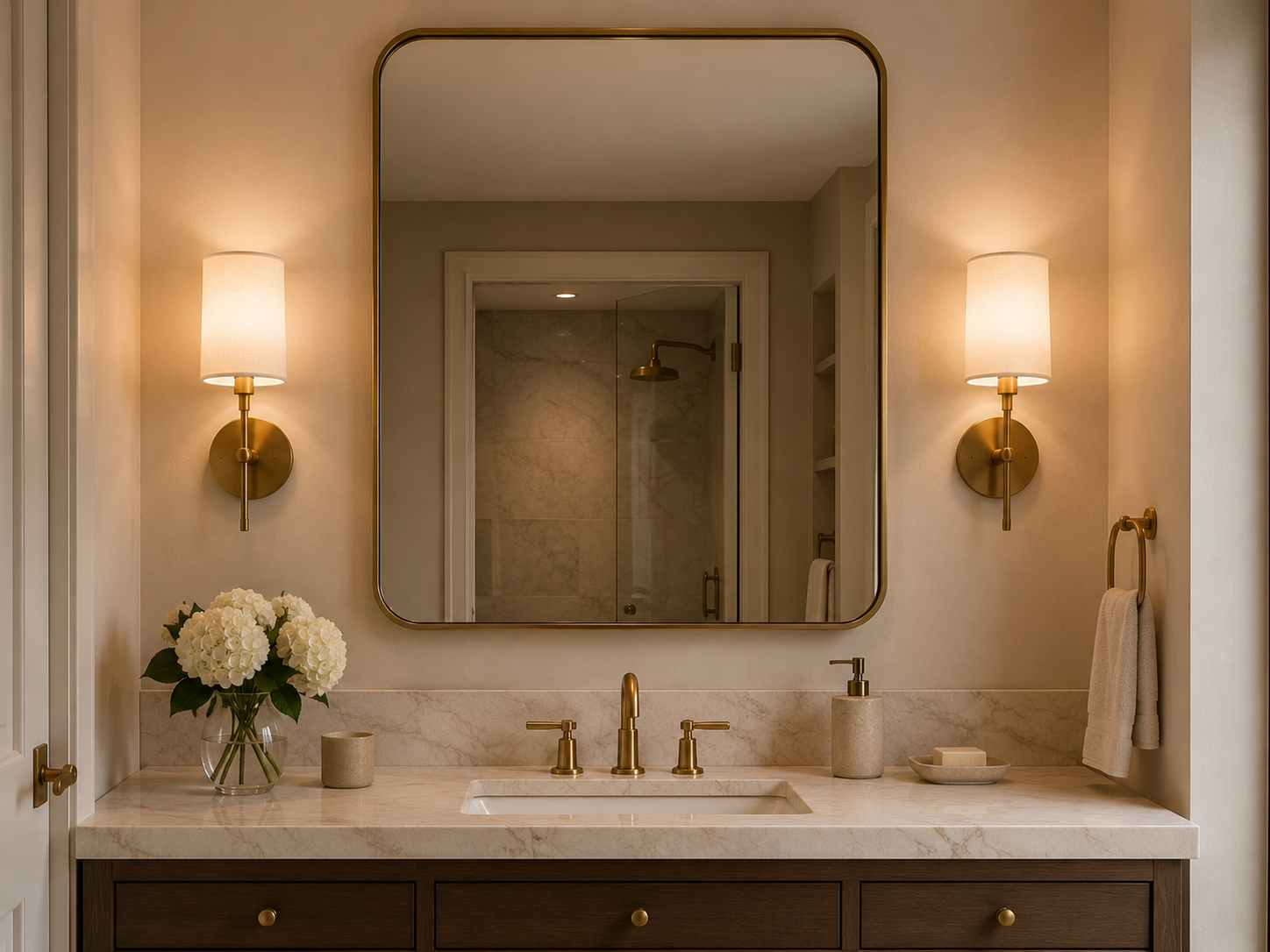
Recommended Vanity Sconce Height
A common placement for bathroom vanity sconces is around 60 to 66 inches from the floor to the center of the fixture. This range usually keeps the light near eye level for most adults.
The exact height should depend on mirror size, ceiling height, fixture shape, and the people using the bathroom. If the sconce is tall, measure from the center of the fixture rather than only the top or bottom.
How Far Apart Should Vanity Lights Be?
When using two sconces beside a mirror, leave enough space so the light feels balanced around the face. The fixtures should not be squeezed too close to the mirror, and they should not sit so far away that the center of the face becomes dim.
For double vanities, each sink area may need its own lighting zone. This can mean one sconce on each side of each mirror, or a thoughtful combination of vertical sconces and overhead vanity lighting.
When to Use a Light Above the Mirror
A vanity light above the mirror can work well when there is not enough wall space for side sconces. It is also useful for narrow powder rooms, small bathrooms, or mirrors that extend close to the side walls.
If using a light above the mirror, choose a fixture that spreads light evenly downward and outward. Avoid fixtures that create a harsh spotlight effect, because they can cast shadows under the eyes and chin.
Avoid Harsh Shadows and Bare Bulb Glare
The biggest mistake in bathroom vanity lighting is choosing a fixture that looks beautiful but feels uncomfortable in use. Bare bulbs, overly bright LEDs, or fixtures aimed directly at the face can create glare.
For a softer result, look for opal glass, frosted glass, fabric shades, or diffused light sources. These materials help spread light more gently and create a more refined bathroom atmosphere.
Choose the Right Color Temperature
Bathroom lighting should feel clean but not cold. Many homeowners prefer warm white light around 2700K to 3000K for a softer residential feeling. This range works well for luxury bathrooms because it keeps the space inviting while still offering enough clarity.
Very cool light can make skin tones look flat or clinical. Very dim warm light may feel relaxing, but it may not be practical for grooming. A dimmable fixture gives the most flexibility, especially in primary bathrooms.
Think About Damp Rating and Bathroom Safety
Bathroom lighting should be chosen with moisture in mind. Fixtures near sinks, showers, and tubs may need proper damp-rated or wet-rated construction depending on placement.
Before choosing a vanity light, check whether the fixture is suitable for bathroom use. This is especially important in small bathrooms, humid spaces, and areas close to showers or bathtubs.
Common Vanity Lighting Mistakes to Avoid
- Using only one overhead ceiling light for the entire bathroom.
- Placing sconces too high or too low beside the mirror.
- Choosing bulbs that are too bright, too cold, or too harsh.
- Using decorative fixtures that do not provide enough usable light.
- Forgetting to check damp-rated or wet-rated requirements.
- Ignoring mirror size when choosing fixture height and width.